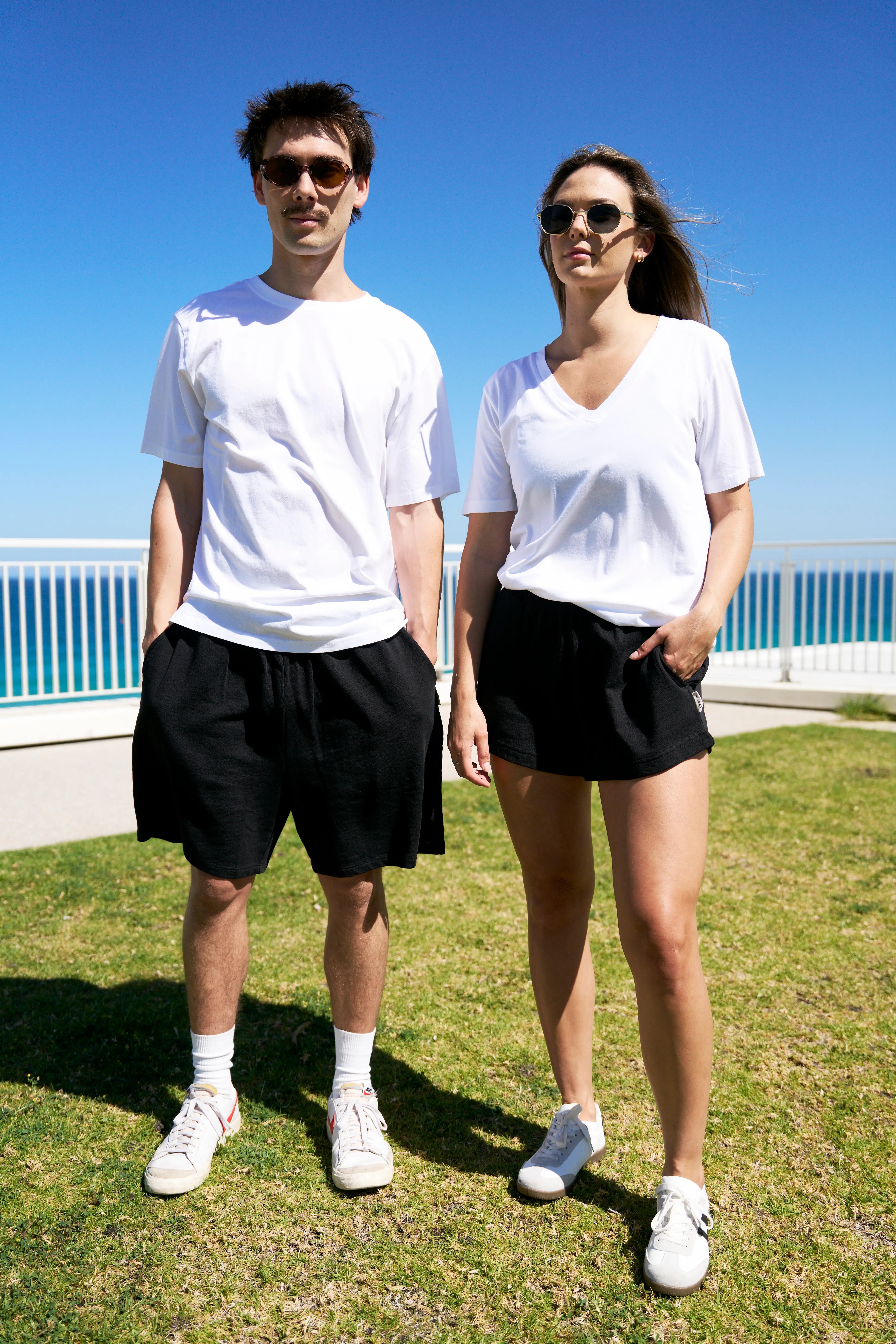
How to build a sustainable wardrobe that lasts
Building a sustainable wardrobe isn’t about replacing everything overnight. It’s about shifting your mindset, choosing fewer, better pieces that are designed to last beyond trends and seasons.
Fast fashion has conditioned us to buy often and discard quickly. A sustainable wardrobe does the opposite. It prioritises quality, longevity and intentional design, creating a collection of essentials that work together, year-round.
Here’s our guide to building your sustainable wardrobe
1. Start with core essentials
Every sustainable wardrobe begins with foundational pieces you can wear on repeat. These are the items that anchor your daily dressing - versatile, durable and seasonless.
A premium organic cotton t-shirt, for example, isn’t just a basic. When thoughtfully constructed, it becomes the foundation of your wardrobe. It layers under sweats in cooler months, pairs with tailored pieces for balance, and stands alone in warmer weather.
Similarly, well-cut organic cotton shorts and structured French Terry sweats create a refined off-duty uniform. These are not trend pieces, they are staples designed to move with you through different settings and seasons.
The key is simplicity. Clean silhouettes. Neutral tones. Timeless design.
2. Choose organic and certified fabrics
What touches your skin matters. Conventional cotton is often grown using heavy pesticides and water-intensive processes. Organic cotton, particularly when GOTS-certified, ensures higher environmental and social standards.
When selecting wardrobe staples, whether it’s a t-shirt, French Terry shorts or wide leg sweats, look for certifications like:
-
GOTS-certified organic cotton
-
OEKO-TEX® Standard 100
-
Fair Trade practices.
These certifications support ethical production, safer fabrics and long-term durability. A sustainable wardrobe isn’t just about aesthetics - it’s about integrity behind every garment.
3. Embrace seasonless dressing
Trends change quickly. Quality should not.
Seasonless dressing means choosing pieces that transition effortlessly throughout the year. A heavyweight organic cotton t-shirt works alone in summer and layers under sweats in winter. French Terry shorts and sweats pair with relaxed knitwear as the temperatures shift.
When garments are thoughtfully designed, they don’t expire with the season, they evolve with it.
4. Focus on durability over quantity
A sustainable wardrobe isn’t large. It’s intentional.
Invest in pieces that hold their shape, maintain their structure and withstand repeated wear. Premium organic cotton French Terry, for example, offers both softness and resilience, delivering comfort without compromising longevity.
Before purchasing, ask:
-
Will I wear this at least 30 times?
-
Does it pair easily with what I already own?
-
Is it made to last?
If the answer is yes, it belongs in your wardrobe.
5. Care for what you own
Sustainability doesn’t end at purchase. How you care for your clothing directly impacts its lifespan. Love your clothing and treat it with respect!
Wash in cold water. Use gentle, eco-friendly detergents. Air dry when possible. Proper care helps organic cotton t-shirts, shorts and sweats maintain their integrity over time, reducing waste and extending their lifecycle.
6. Build around a cohesive colour palette
Neutral, minimalist tones allow your wardrobe to function as a system rather than isolated pieces. When your t-shirts, shorts and sweats are designed to complement each other, styling becomes effortless.
This reduces decision fatigue and prevents unnecessary purchasing. Each piece earns its place.
The sustainable wardrobe philosophy
Building a sustainable wardrobe is not about perfection. It’s about intention.
Choose GOTS-certified organic cotton. Invest in premium essentials. Prioritise seasonless silhouettes. Care for your garments properly. And most importantly, buy less but buy better.
At STAPLE Co, our organic cotton t-shirts, French Terry shorts and sweats are designed with this philosophy in mind. Timeless, minimalist and consciously made, they are created to support a wardrobe that works harder, lasts longer and treads lighter.
Fewer pieces. Better quality. Worn often.